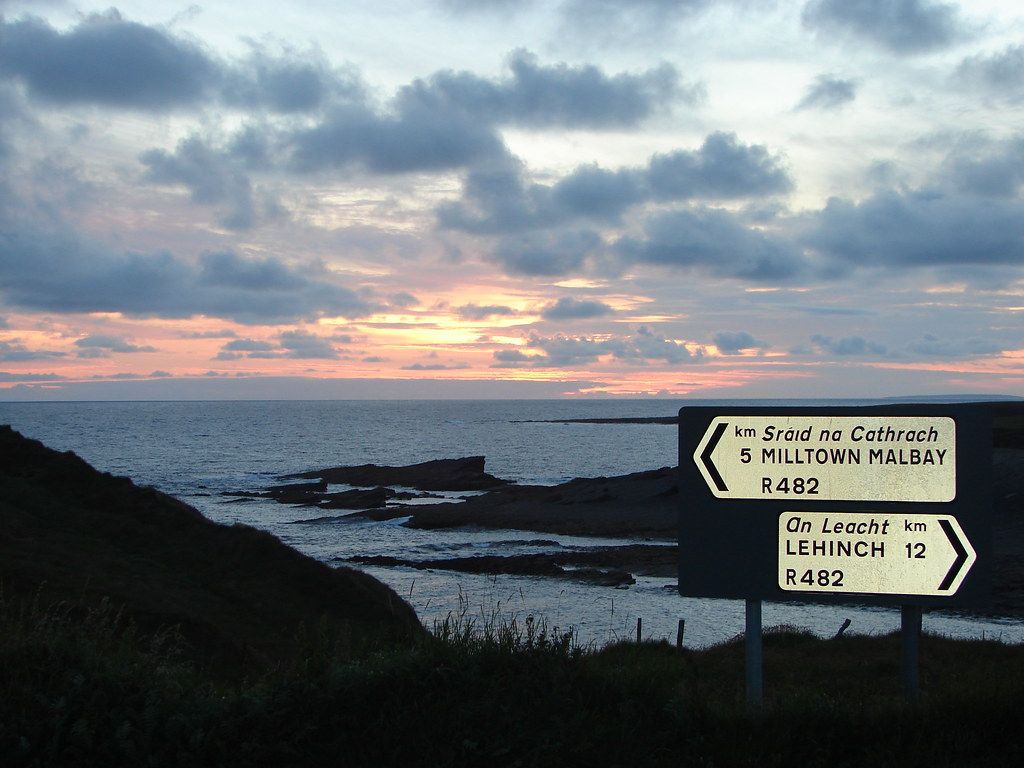
Miltown Malbay is a small town with one long main street, a few side roads and fields running right up to the backs of the houses. On a wet Tuesday in February it can seem very quiet. Yet the town's name is known wherever Irish traditional music is played, and that is mostly down to the music made here over generations, and to one man in particular.
A town built around a street
The main street runs along the line of the old coast road, now the N67, and most of what you need is on it or just off it. Two- and three-storey houses and shops face each other in long terraces, many painted in strong colours. Behind them, the land rises gently inland and falls away towards the sea to the west.
The town grew as a market centre for the farms around it, and in the nineteenth century it also became a place where families from Ennis and further afield came for the sea air at nearby Spanish Point. For years the West Clare Railway ran through here on its way from Ennis to Kilkee and Kilrush. The line closed in 1961, but you can still trace parts of its route in the landscape around the town.
Riding in, you notice how the town sits a little back from the sea. The coast is only a few kilometres away, but from the main street you mostly see roofs and sky.
The music
Traditional music in west Clare is not a show put on for visitors. It is something people grow up with, learn at home and from neighbours, and play together for its own sake. Miltown Malbay has been one of its strongholds for a long time.
The best-known name connected with the town is Willie Clancy, a uilleann piper born nearby in 1918 who died in 1973. He was a carpenter by trade and a piper of great skill and character, and his playing and his tunes are still studied and loved. A statue of him stands in the town.
After his death, musicians set up a summer school in his memory. It runs for a week each summer, usually in July, and draws students and players from Ireland and all over the world to learn the pipes, fiddle, flute, concertina, dance and song.
During that week the town is transformed: full, busy, with music spilling out of doors and windows and players gathered on corners. The rest of the year it is quieter, but music does not stop.
What you will hear
The music played here is mostly dance music: reels, jigs, hornpipes, polkas and slides, passed down by ear and played on fiddle, flute, tin whistle, concertina, accordion and the uilleann pipes. The pipes are the instrument most tied to the town. They are played sitting down, with bellows under one arm pumping air into a bag, and their sound is softer, reedier and more intricate than the Scottish pipes many people picture.
West Clare has its own way with the music, often described as unhurried and full of lift, with room for the tune to breathe. Slow airs and unaccompanied songs, often in Irish as well as English, are part of it too. You do not need to know any of the names to feel the difference between a tune played for dancers and one played for the room.
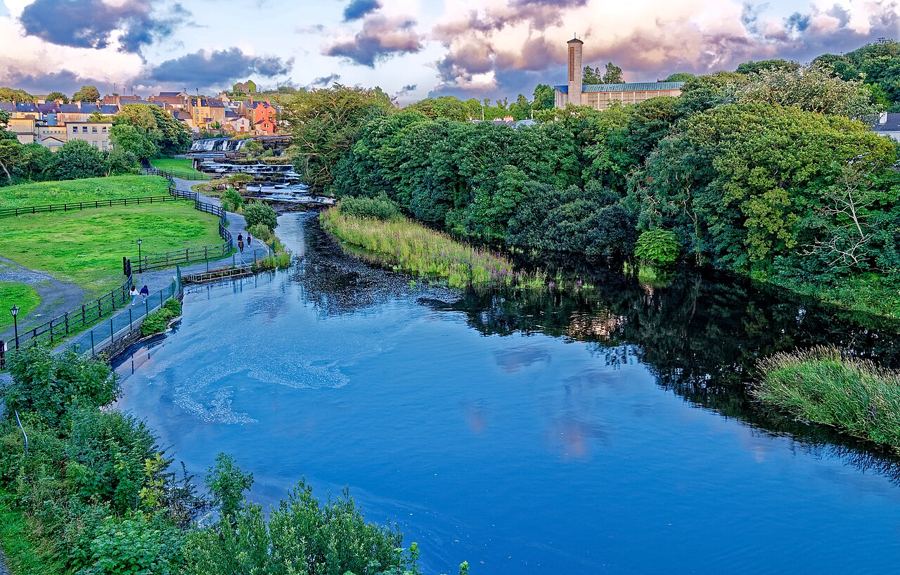 Next stretch of coastEnnistymon and the Cascades
Finding a session
A session is an informal gathering of musicians, usually in a pub, playing tunes together. There is often no stage, no fixed start time and no list of who will turn up. That is part of the point.
- Ask locally. Sessions come and go, change nights and move, so the people around you are the best guide.
- Arrive later than you might think. Things often get going well into the evening.
- Listen first. The musicians are playing for each other as much as for anyone listening. Keep conversation down near the players, and do not crowd them.
- If you play, bring your instrument but wait to be asked, or ask quietly whether you can join. Some sessions are open, some are not.
- Do not film without asking.
Traditional music in west Clare is not a show put on for visitors.
Above all, give it time. The best moments at a session are often the quiet ones: a single slow air, a song in the corner, a tune that someone's grandfather played.
The coast nearby
The sea is never far. Spanish Point is about 3 km west of the town, with a wide beach, a reef and surf. North of it lies a second White Strand, a sandy beach backed by low ground. South, the coast road runs through Quilty, with its storm beaches and Mutton Island offshore.
Kilfarboy
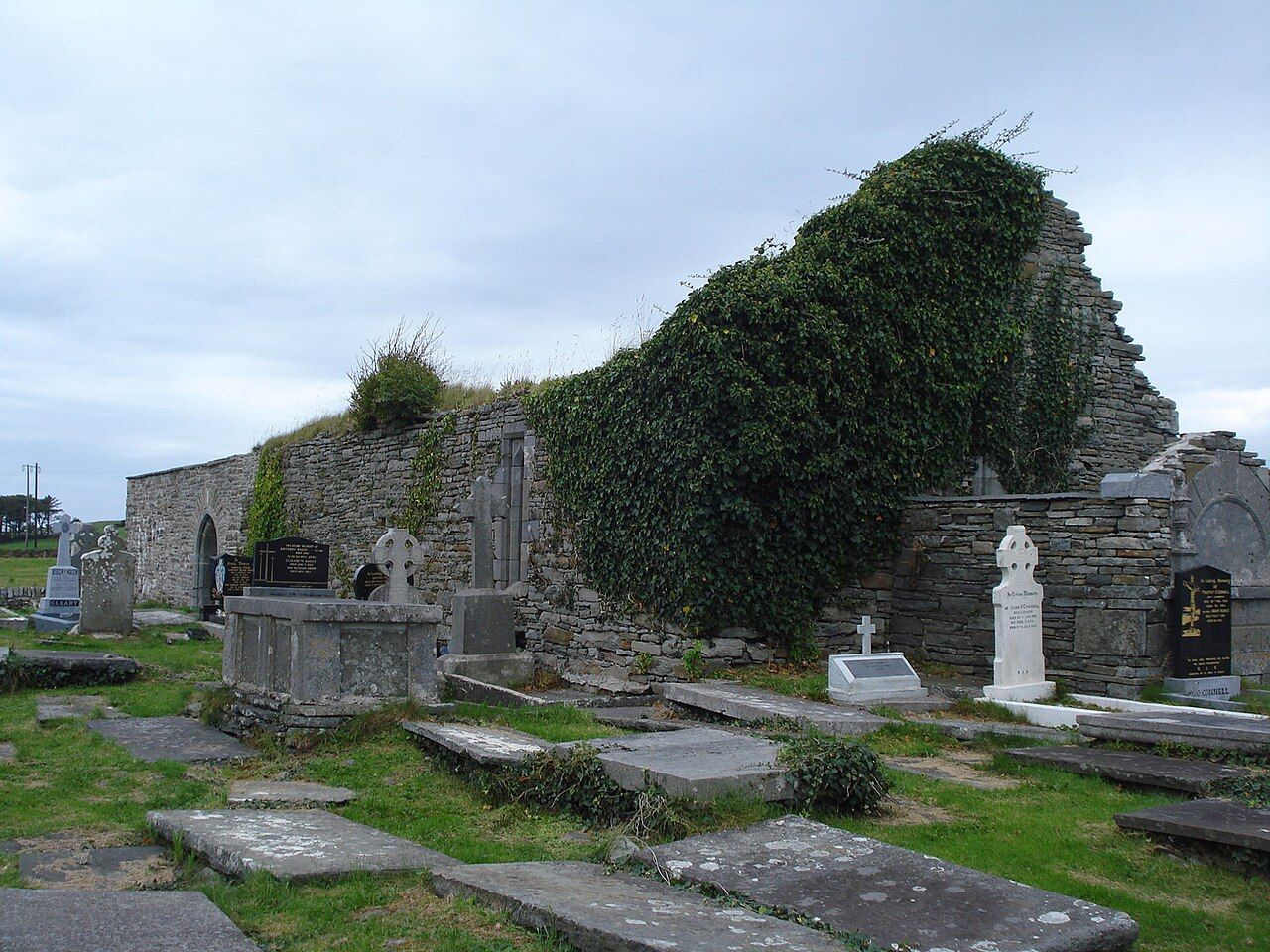
A short ride from the town brings you to Kilfarboy, the old parish church of the area, standing in a walled graveyard among open fields. The church is a roofless medieval ruin, its stone walls heavy with ivy, and it is linked with St Laichtín, an early saint remembered in several places in Clare. Little is known for certain about the building's early history, and parts of it were probably altered and rebuilt over the centuries.
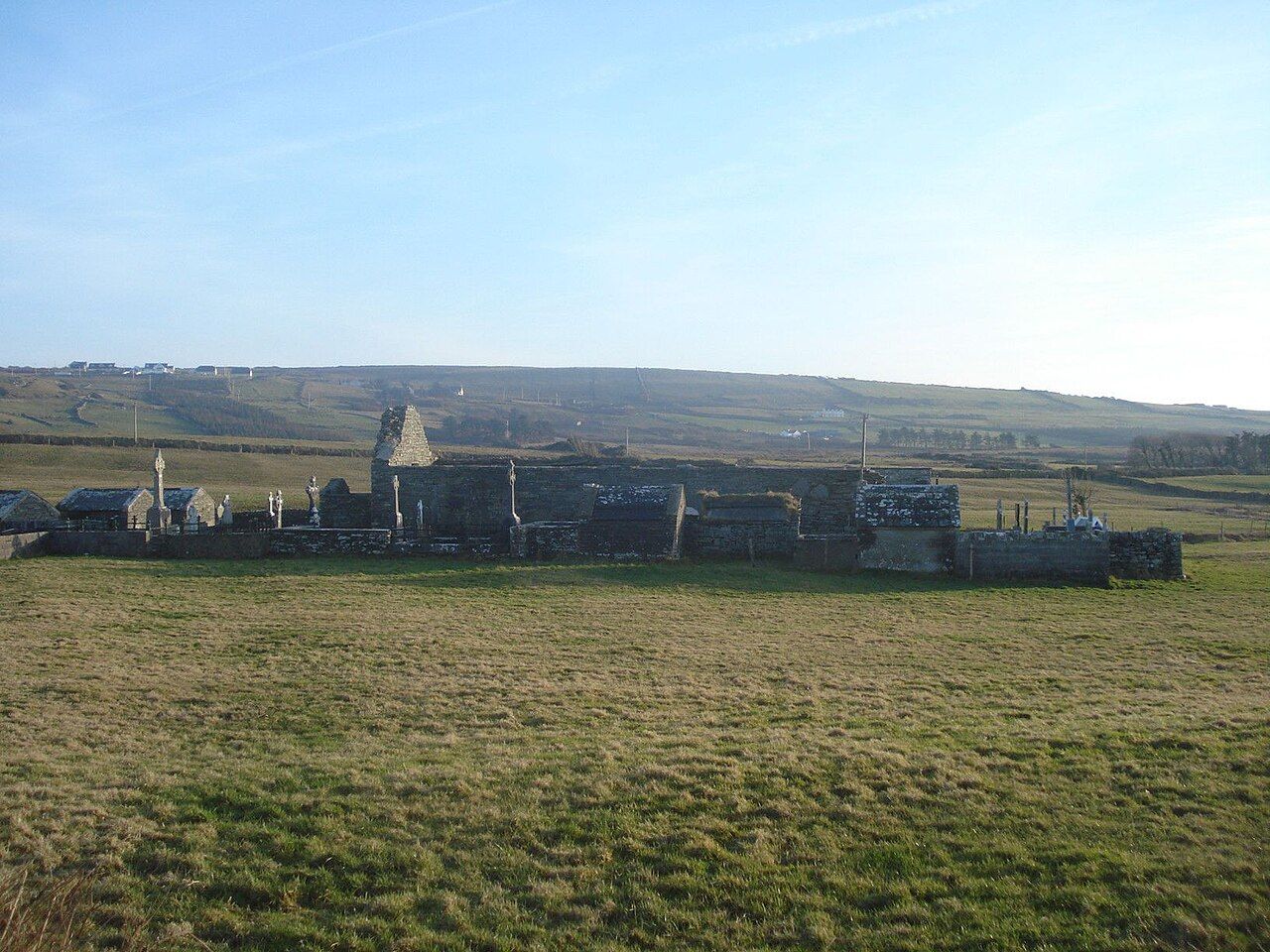
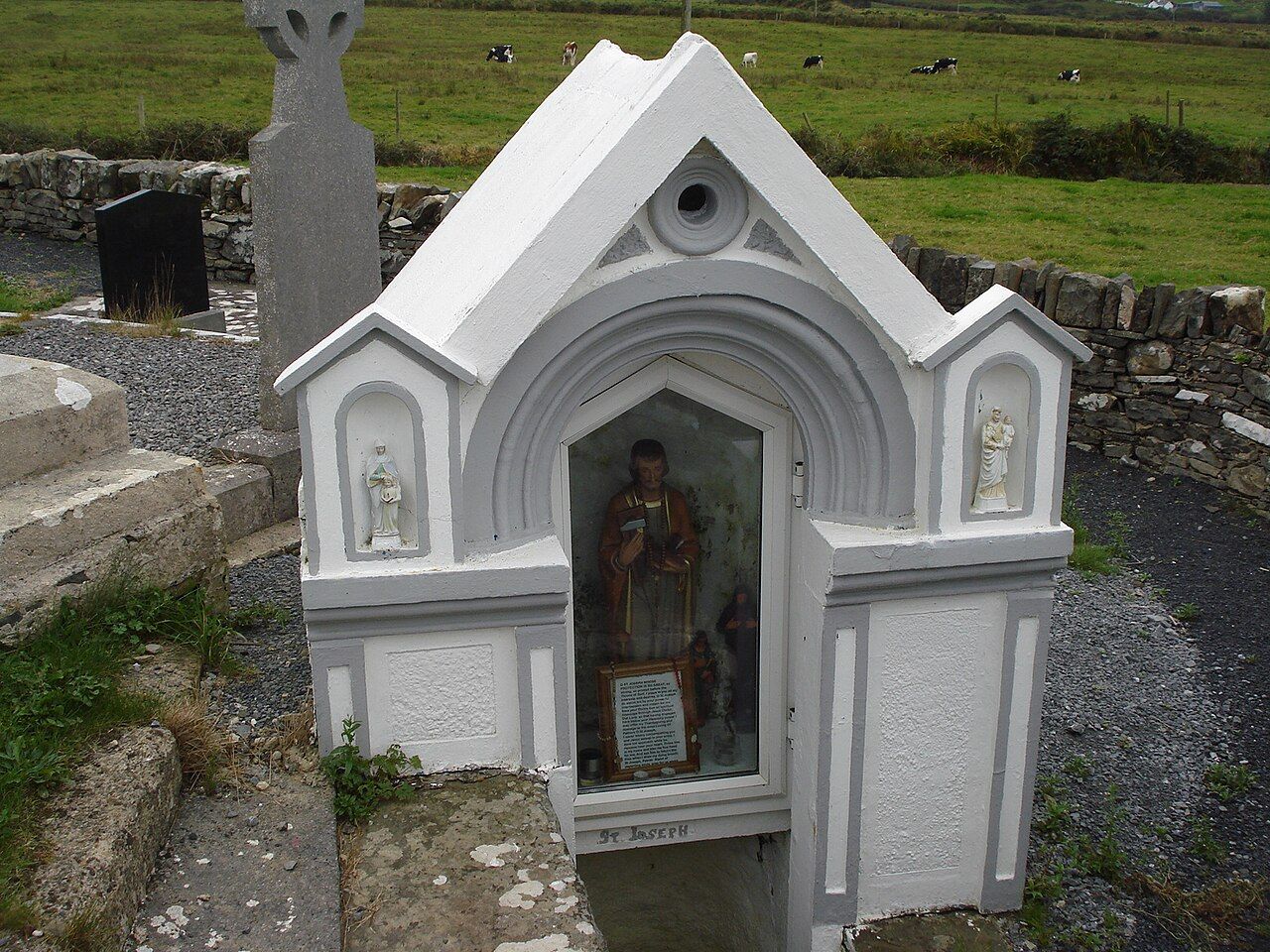
The graveyard is still in use, so walk quietly and keep to the paths between the graves. Inside it is a holy well, now housed in a small whitewashed shrine dedicated to St Joseph. Wells like this were places of local devotion for generations, and people still leave small offerings and prayers. Treat it with the same respect you would give a church.
A short loop from the town out to Spanish Point, along the shore and back is about 8 km and fits easily into an afternoon. A longer day takes you north along the coast to Lahinch, about 13 km away, and back by the quieter inland roads.
The coast here is open and the wind is constant. Read the notes on wind and weather before you plan a ride, and save the stretch that faces the wind for when your legs are fresh.
Riding in and around town
The main street is also the main road, so traffic passes through all day, and parked cars line both sides. Ride carefully, watch for doors opening, and expect vehicles to pull out without much warning.
The small roads inland are quieter and rise over low hills with wide views back to the sea. They are narrow, often with grass down the middle, and you will share them with tractors and the odd herd of cattle being moved. If you are riding back after an evening of music, the roads are dark and unlit. Lights front and rear, something bright to wear, and a steady pace are essential.
On the main street, take care with the drains and painted lines in the wet, and give yourself room when passing the parked cars that line the kerb.
When to come
The summer school week is the busiest time by far; accommodation fills early and the town is packed. If you want music but less crowd, the weeks either side and the shoulder months are a good choice. In winter the town is quiet, the weather is rough, and sessions are more local, but they are still there for those who look.
Whenever you come, give the town an evening as well as a day. The street and the coast are worth a ride; the music is the reason people come back.
Pictures here: Holger Uwe Schmitt, cc-by-sa