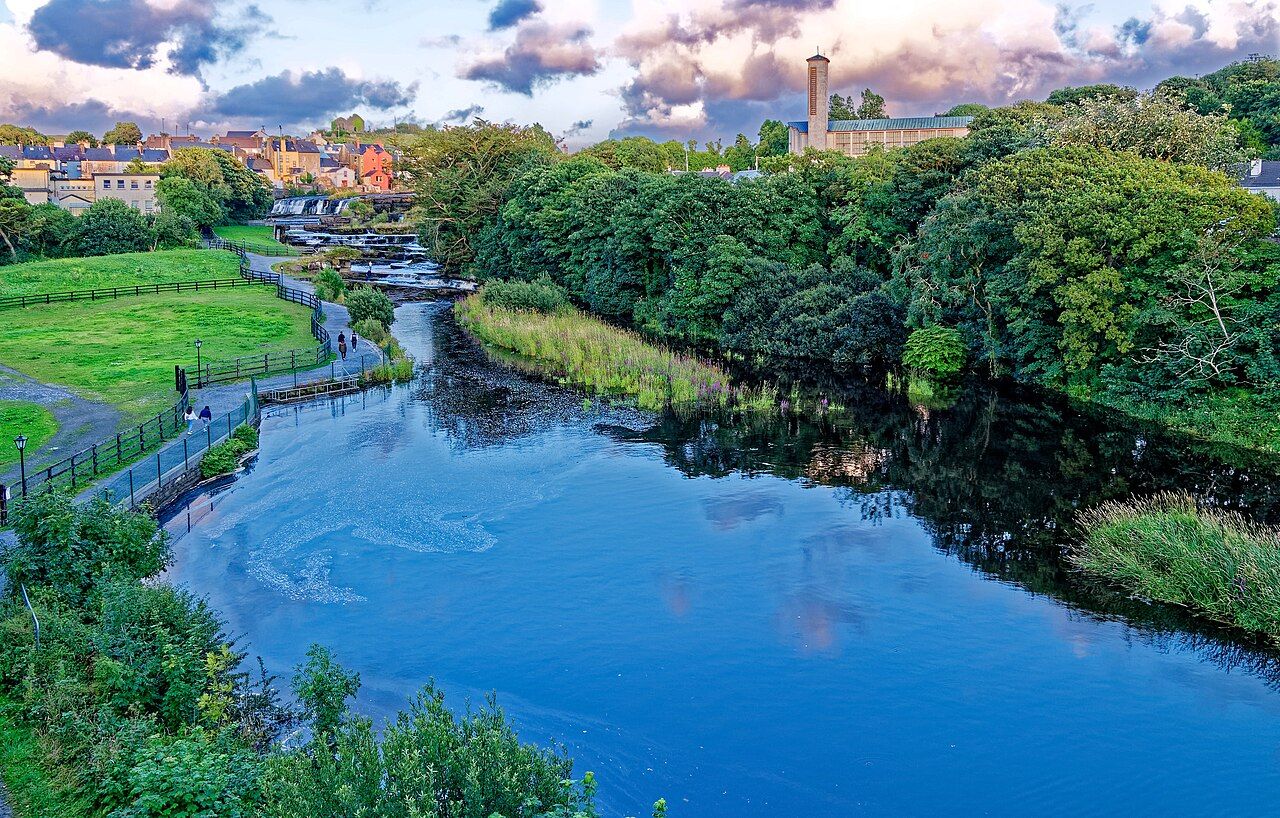
Ennistymon is the town most people pass through on the way to the coast, and many never stop. That is a pity. It is a proper market town, built on a slope above the Inagh river, with steep streets, old shopfronts and, right in the middle, a wide run of falls that roar after rain. For anyone staying near Lahinch, it makes a short, easy ride on a rest day.
The Cascades
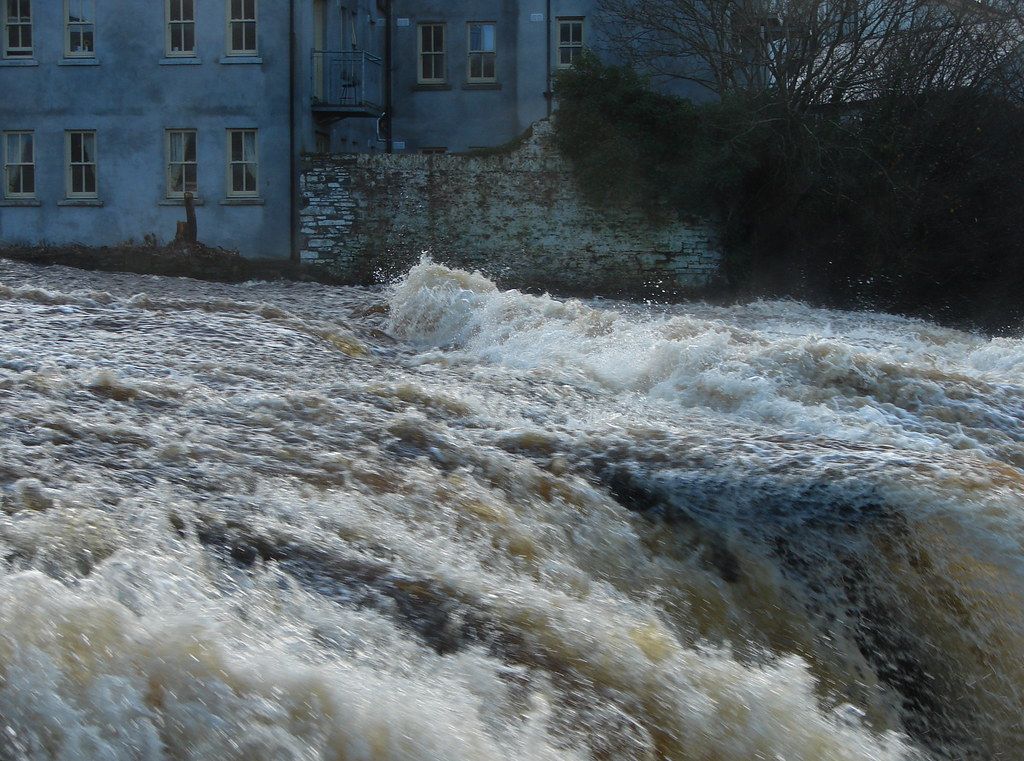
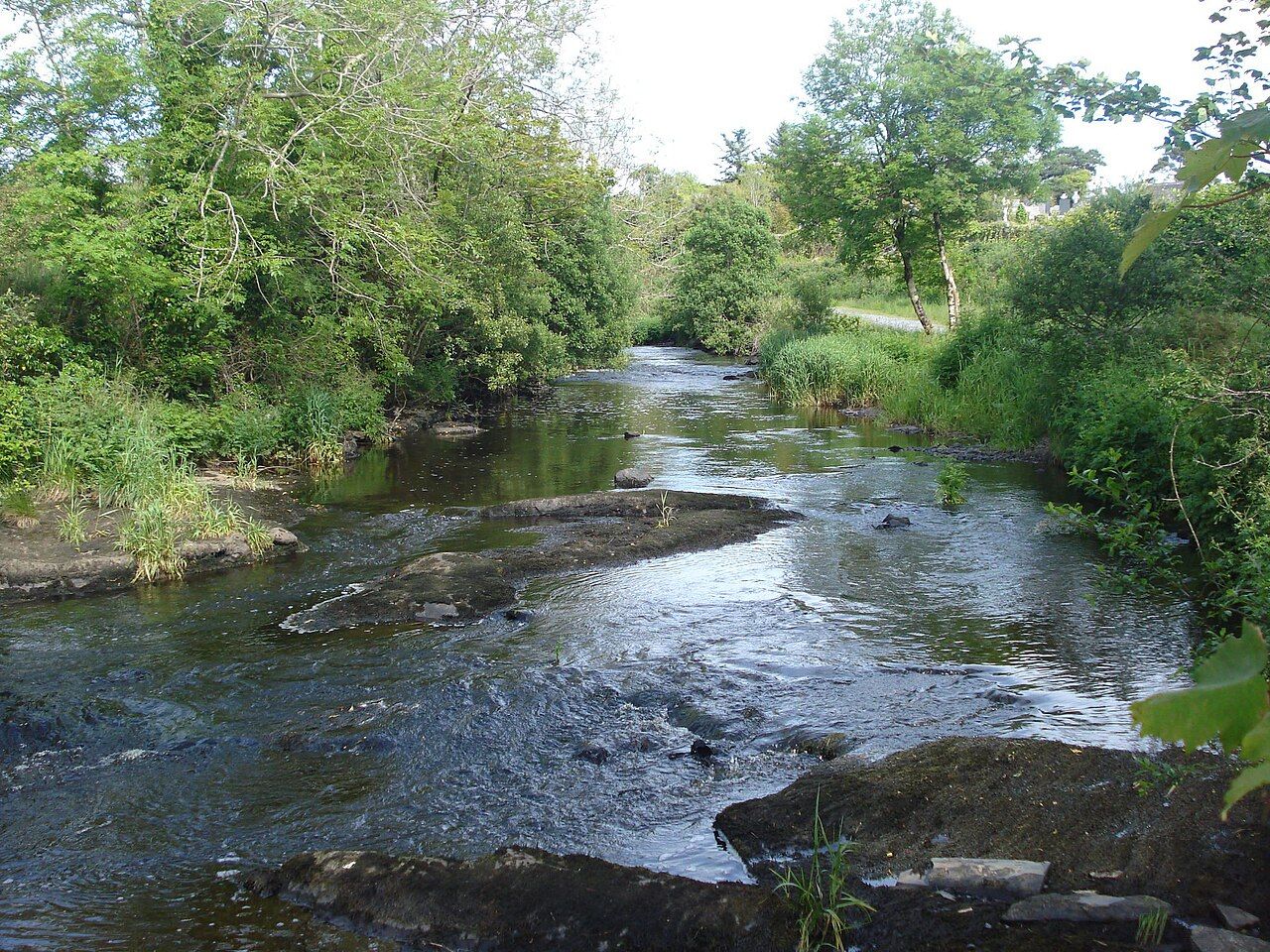
Below the bridge at the bottom of the town, the Inagh river runs over a series of broad, shallow steps of rock. These are the Cascades. In dry weather they are a gentle spill of water across dark stone. After heavy rain they become a wide brown torrent, loud enough to hear from the street.
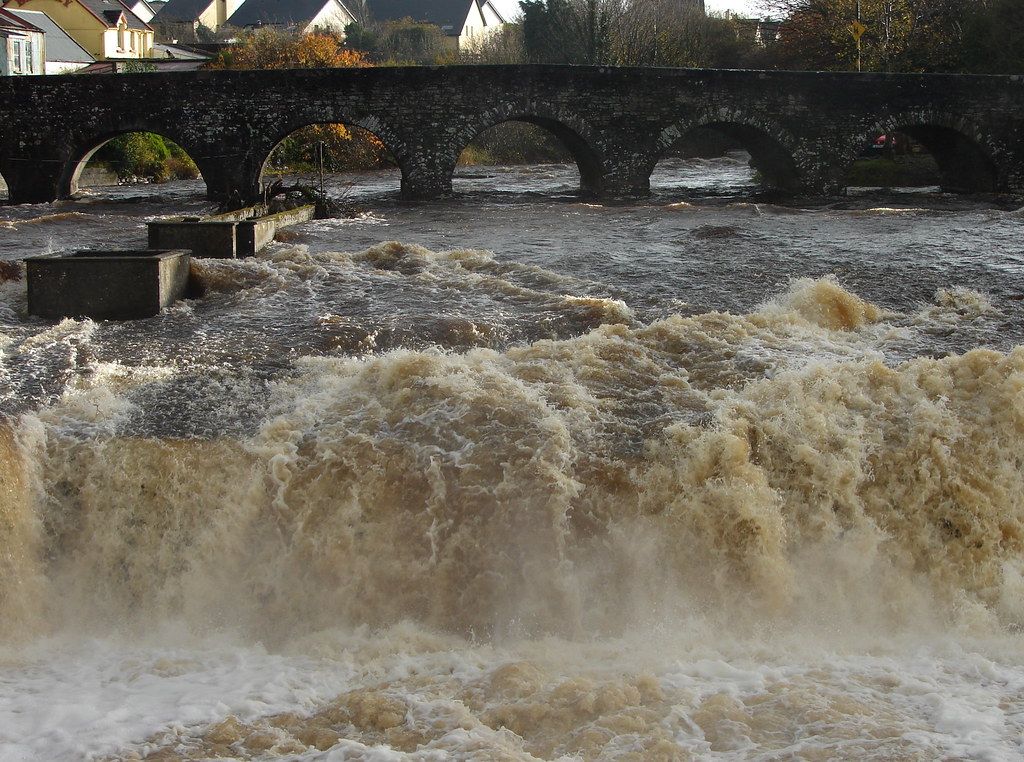
You can see them from the bridge, from a riverside walk and from small green spaces along the bank. A path runs beside the water for a short way, with views upstream to the falls and the houses above them.
Keep to the paths and back from the edge. The rock is slippery, the water is stronger than it looks, and after rain the river rises quickly.
A market town on a slope
Ennistymon grew as a market and service town for the farms around it. Its main street climbs from the river, and side streets branch off at angles, so you are always going up or down. Churches and rows of houses and shops sit one above the other.
The town sits where the road from the coast meets the roads inland, and that crossing has made it a meeting place for a long time. Fair days, markets and the business of the farms around it shaped the streets you ride through today.
It is a working town rather than a resort. People come in to shop, to see the doctor, to do business. That gives it a different feel from the coast, and it is part of why the place is worth an hour.
Shopfronts as a building type
What catches the eye most is the shopfronts. Many of the buildings on the main street keep traditional painted fronts: a wooden fascia with a name in hand-painted letters, pilasters on either side, a deep window and a door set in the middle. Colours are strong, deep reds, greens and blues, sometimes with gold lettering.
This kind of shopfront was once common in every Irish town, and many were lost when businesses modernised. Ennistymon kept a good number, some still in use by the families whose names are over the door, some repainted and reused for new trades.
- Look up at the fascias for the lettering and the carved brackets at each end.
- Notice how the fronts are fitted to older houses, often with the living rooms above.
- Look at the side streets too; some of the best fronts are on the quieter corners.
Treat it as a walk through a building type rather than a list of businesses. The names change; the craft of the fronts is what lasts.
 Next stretch of coastMiltown Malbay and the music
The river upstream
Above the town, the Inagh river winds through farmland and scrub, a quieter, slower river than the one at the Cascades. It rises in the hills to the east and passes the village of Inagh before reaching Ennistymon. Below the town it runs on to the sea at Lahinch.
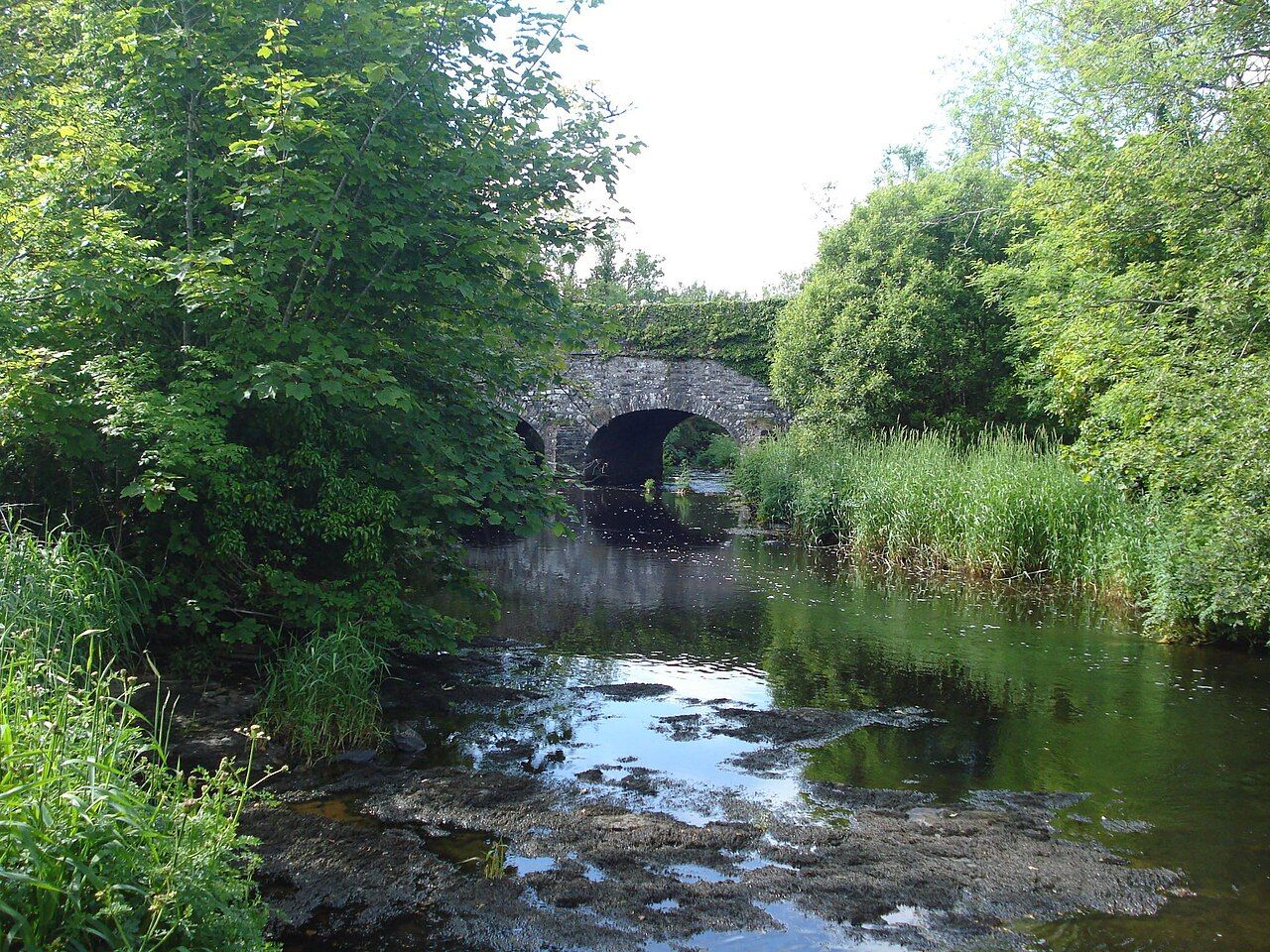
If you want a longer ride, the small roads that follow the river valley inland are quiet and green, with old stone bridges and a few short climbs. They make a pleasant change from the open coast, especially on a windy day when the valley gives some shelter.
Riding in and around Ennistymon
From Lahinch, the ride is about 4 km up the river valley. The road climbs steadily for much of the way, steeply in short sections, and carries traffic in both directions, including lorries. On the way back it is a fast descent; take it steadily.
The town itself is steep, and the main street is busy, with parked cars on both sides. Get off and walk if it is easier, and lock your bike near the bridge so you can explore on foot.
A gentle half-day loop runs from Lahinch to Ennistymon, out along a quieter road through the hills and back towards the coast; it is about 20 km and gives you a good view of the bay on the return. If you are heading further, the town is on the road towards Ennis and the train; see getting here with a bike.
A rest-day stop
Ennistymon is a good place to spend an unhurried day off the coast. Watch the river, wander the streets, find something to eat, and sit by the water for a while. It is also a useful stop for supplies, with more everyday shops than the smaller villages.
Come after rain if you want to see the Cascades at their loudest. On a still, dry day, they are gentler and you can sit on the bank and listen to the water. Either way, the ride back down to the sea at Lahinch, with the bay opening up ahead, is a fine way to finish. Read the notes on riding safely if you plan to explore the narrow roads inland.
Pictures here: Mark Waters, cc-by