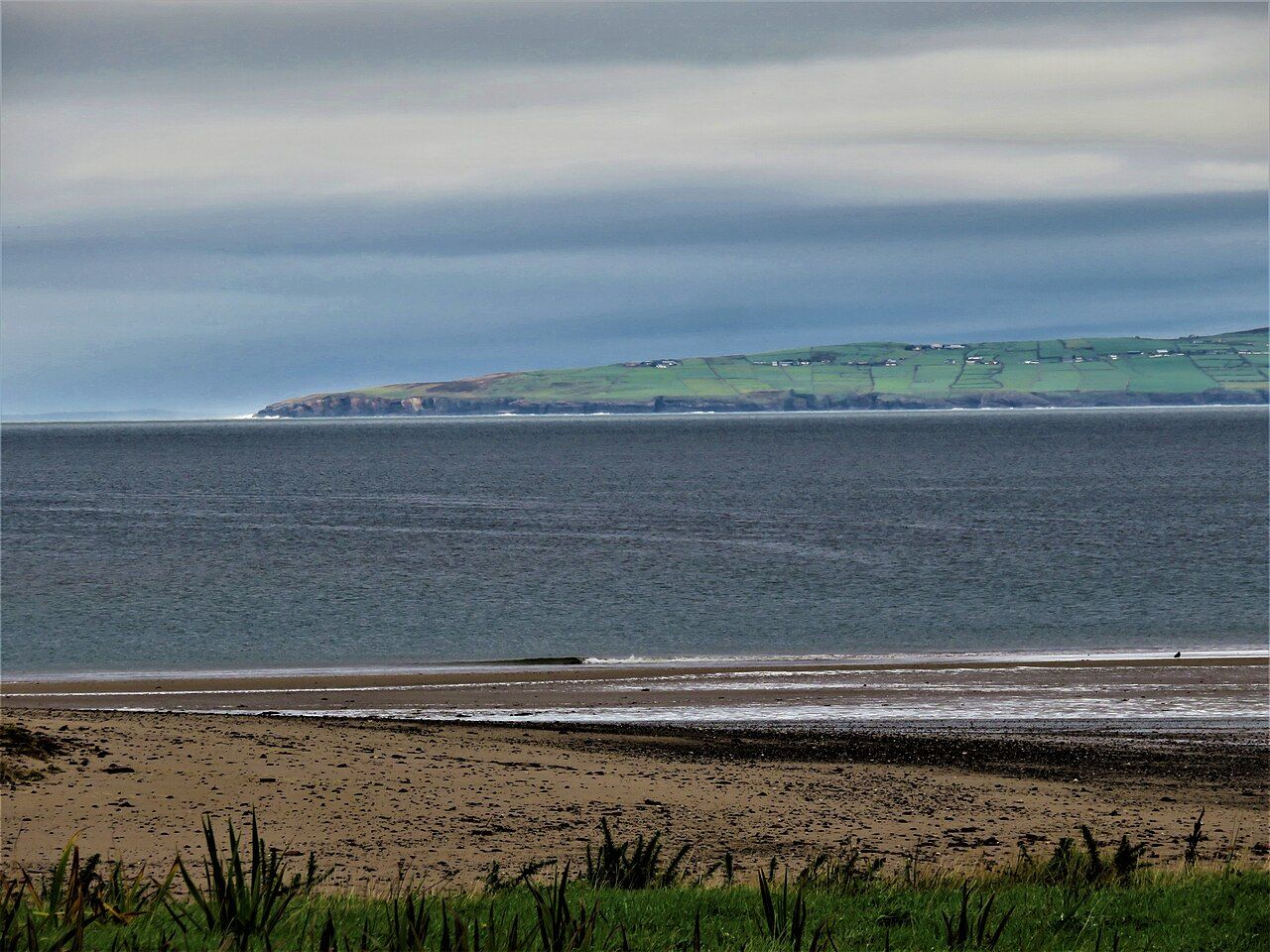
The Loop Head Peninsula and the coast north of it face straight into the Atlantic. There is nothing between you and North America but ocean, and the weather that reaches you comes in off that open sea. That gives the coast its light, its long views and its clean air. It also means the wind is almost always blowing, and showers can arrive with little warning.
The weather is a reason to plan, not a reason to stay at home. It just means you plan a ride here a little differently. A day that starts grey can end in clear evening light, and the same wind that slows you on the way out can carry you home in half the time.
The weather also changes quickly from place to place. It can be raining at Kilkee and bright at Loop Head, or calm in the shelter of a valley and blowing hard on the headland above it.
The prevailing wind
The wind on this coast most often comes from the south-west or west. It brings mild, damp air off the ocean, and it is usually strongest on the exposed headlands, such as the tip of the peninsula at Loop Head, and on the open stretches of the coast road.
That has a few practical results:
- Riding west or south-west, towards the tip of the peninsula, is often into the wind.
- Riding north-east along the coast, from Kilkee towards Lahinch, is often with it.
- On the narrow peninsula, a south-westerly hits you side-on on many stretches, which can be harder to handle than a headwind.
The wind does change, and an east or north wind brings different conditions: cooler, drier air, and sometimes the clearest days of the year.
Into the wind first
The single most useful rule on this coast is to ride into the wind first. Start the day heading into it, while you are fresh, and turn for home with it behind you.
On a one-way ride, for example along the coast from Loop Head to Lahinch, think about which direction makes more sense for the forecast. With a south-westerly, riding north-east is far easier. The notes on riding the Wild Atlantic Way look at that stretch in more detail.
Gusts and crosswinds
Gusts are what catch people out. A steady wind is manageable; a sudden gust from the side, as you pass a gap in a wall or come out from behind a house, can push you across the road.
- Keep both hands on the bars in exposed places.
- Leave room on your left so a gust does not push you into the verge.
- Deep-section wheels and loose bags make crosswinds worse.
- On very windy days, choose sheltered inland routes, or take the day off the bike.
Showers and rain
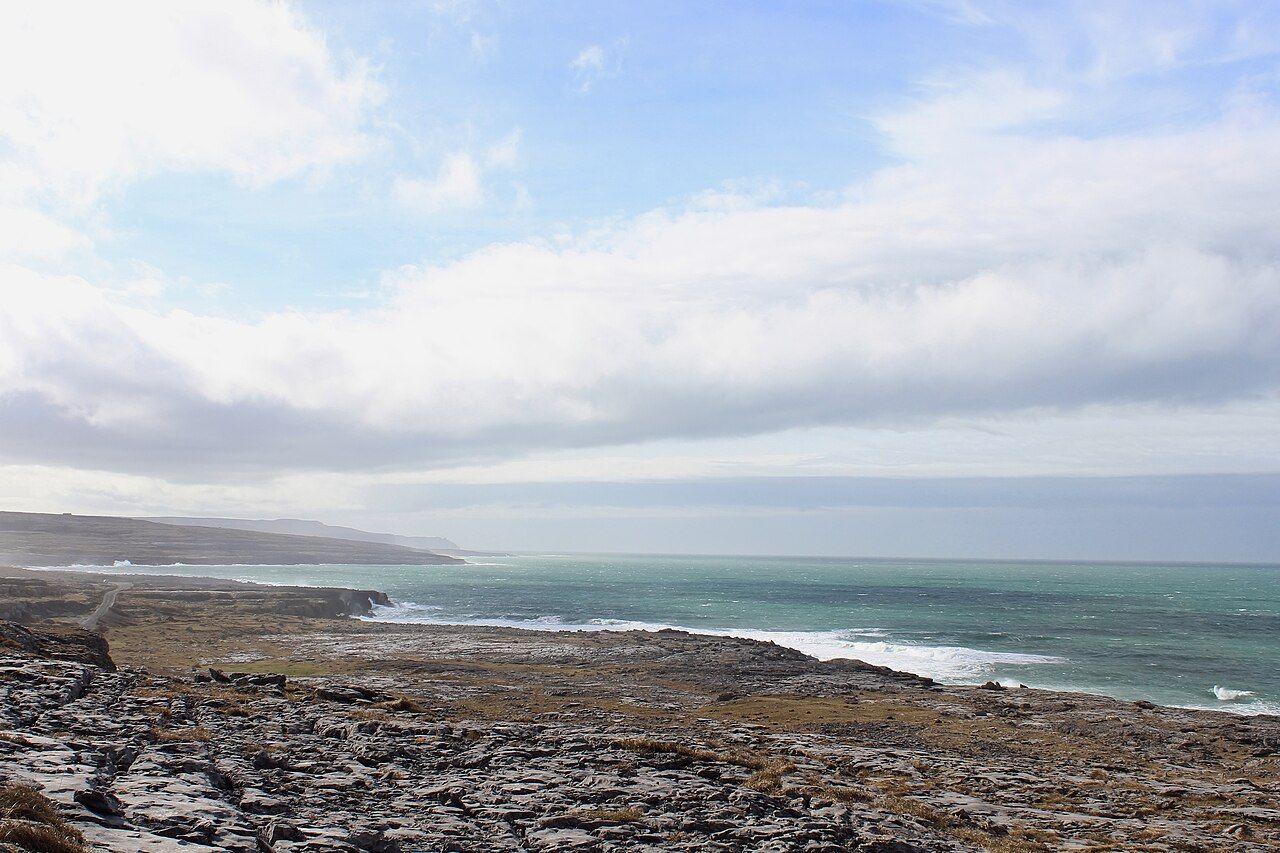
Rain here usually comes as showers rather than all-day downpours, though wet days do happen. A typical day might bring bright sun, a squall of rain and wind, then sun again within an hour. You can often see a shower coming in from the sea, a grey curtain moving across the water.
 Next stretch of coastSeabirds, seals and the sea
A good waterproof jacket is essential, and waterproof trousers or overshoes help on longer rides. When a shower hits, it is often better to shelter for a few minutes than push on; it may well pass. Roads stay wet after rain, and painted lines, cattle grids and metal covers become slippery.
Sea fog and mist
On some days, especially in spring and early summer, sea fog or low cloud rolls in off the Atlantic. It can sit on the headlands while inland is bright, or come in suddenly and cut visibility to a few dozen metres.
- In fog, drivers will not see you until late. Use front and rear lights, even in daytime.
- Wear something bright.
- Keep well back from cliff edges. In fog it is easy to misjudge where the land ends.
Fog often lifts as the day warms, or as the wind changes. If it settles in, an inland ride may be clearer.
The seasons on the coast
Spring
Spring brings lengthening days, fresh green fields and often some settled spells. It can be cool and windy, and showers are frequent, but late spring is often one of the drier times of year.
Summer
Summer is mild rather than hot. Long days mean you can ride late into the evening, with light lasting until around ten at night near midsummer. It is also the busiest season on the roads.
Autumn
September can be one of the best months, with quieter roads and some calm, clear days. Later in autumn the first Atlantic storms arrive, with strong winds and big seas.
Winter
Winter is short-dayed, wet and windy, with occasional storms strong enough to keep everyone indoors. Frost and ice are less common on the coast than inland, but they do happen. It is the season for storm watching from a safe distance, not for long rides.
The sea itself
Wind and weather out at sea shape the coast as much as on land. Swell made far out in the Atlantic can reach the coast on a calm, sunny day, and waves on the cliffs and reefs can be much bigger than the local wind would suggest.
Waves can run far up rock shelves and over low cliffs without warning. Never go close to the edge to look at the sea, and keep well back on rock platforms, at places like the Bridges of Ross. The ocean that makes this coast so beautiful is also what makes it dangerous.
Pictures here: Andreas Trepte, cc-by-sa